
A Little Southmayd Herstory
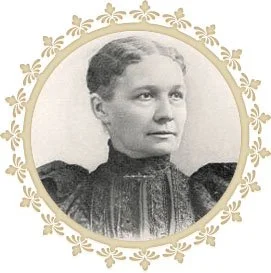
In 1889, a woman in Waterbury had to leave the only city she had ever called home. She was older, and there was simply no place in town willing or able to house her. So she packed up and moved to Meriden, where she could find a room. Her friend, a Waterbury woman named Sarah Donaldson, never quite got over it.
Donaldson did not have much by way of resources. What she had was a conviction, stated plainly and repeated for the rest of her life: every woman should have a suitable place to live. She decided that if Waterbury did not have a place for women like her friend, she would build one.
She started with ten dollars of her own money, an amount that in 1889 was no small sum, and opened a bank account. Then she went looking for others who agreed with her. She found ninety-nine of them, Waterbury women who each put in ten dollars of their own, until there was enough in that account to imagine something real. She spent years after that doing the unglamorous work that turns a conviction into an institution: raising money in ten and twenty dollar increments, knocking on doors, and searching the city for a building that might work.
In June of 1894, she found it. A modest one-family house and lot on North Main Street, the kind of place that would not have drawn much notice from anyone who did not know what it was for. It took four more years to make it ready. On September 26, 1898, the house welcomed its first resident, an elderly blind woman who, like Donaldson's friend a decade earlier, wanted only to stay in the community she knew. She got to.
Donaldson named the organization not for herself but for Dr. John Southmayd, one of the early pastors of Waterbury's First Congregational Church, a small act of deference from a woman who was not particularly interested in having a building named after her. She spent the rest of her working life expanding what that first house had started, and she stayed on the board, active and engaged, until she died in November of 1916 at the age of eighty-three.
That same year, the board she had led purchased an acre of land on Columbia Boulevard for twelve thousand dollars, with plans for something larger than the house on North Main Street could ever be. It took almost a decade to build. In 1925, the three-story home that still stands on Columbia Boulevard today opened its doors to thirty-five residents, and Southmayd Home, as it had come to be called, became the institution generations of Waterbury families would come to know.
It is easy, looking at a building that has stood for a hundred years, to assume its permanence was inevitable. It was not. It existed because one woman refused to accept that a friend should have to leave her home simply because she had grown old, and because ninety-nine other women agreed with her enough to hand over ten dollars they could have spent elsewhere. Southmayd Home has operated continuously since that first resident arrived in 1898, through depressions and wars and every kind of change a city like Waterbury has gone through in a century and a quarter, and it has done so without ever losing the thing Sarah Donaldson actually built, which was never really a building at all. It was a promise that a woman would not have to leave home just because she needed somewhere safe to grow old.
The house on Columbia Boulevard today has space for thirty-five women, and it still runs on a version of the same idea Donaldson had in 1889, that this should be a place people can afford, not a place they have to qualify for. Southmayd answers to no shareholders and takes no direction from an outside parent company. It operates independently of Medicare, and rather than leaning on Medicaid, it leans on the Southmayd Foundation, a fund built over more than a century of gifts and bequests from families who once called this place home. That foundation quietly covers roughly half the true cost of caring for every woman who lives there, which is how room rates can start at just $1,900 a month, a figure set deliberately to fall within the range of what many women's Social Security checks actually cover. There is no separate bill for medication management, no added fee when someone needs more help than she did the year before. A resident is looked after by a full-time registered nurse, eats three home-cooked meals a day, and lives in a house rather than a facility, with neighbors instead of a roster of residents she never sees.
None of that is really an accident. It is the same conviction Sarah Donaldson had at a kitchen table in 1889, still doing what it was built to do a hundred and twenty-eight years later. Very few places like it are still standing, and fewer still have managed to stay this way, small, independent, and answerable only to the women who live there, for this long.
This September marks 128 years since that promise was first kept.
